Expand Your ECerS 2027 Experience
Join us for a series of specialized Satellite Events held in conjunction with the ECerS 2027 Congress.
These independent symposia and forums explore specific scientific fields that are not fully covered by the main Congress programme, offering focused scientific discussions, dedicated networking opportunities and the possibility of connecting with specialized research and professional communities.
Special Registration Rates:
To encourage broad participation across different scientific communities, attendees may register exclusively for a Satellite Event through a dedicated reduced registration fee. Registration for a Satellite Event does not require registration for the main ECerS 2027 Congress.
Registration for a Satellite Conference only includes access to the scientific sessions of this Satellite Conference on the day in which it is organised and does not include access to the main ECerS 2027 Congress scientific program.
| Category | Fee |
| Regular fee | 300,00 € |
| Students * | 200,00 € |
* To qualify for the student fee, participants must provide a valid student ID card and/or an official document from their university or academic institution confirming their current student status. This may include enrolment in a Master’s or PhD programme
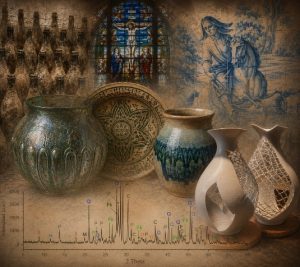
International Symposium on Ceramics and Glass in Cultural Heritage
Ceramics, the first human-made synthetic material and later glass, are materials closely linked to the historical and social development of humanity, either for artistic or for technical purposes. Consequently, studies of historical ceramics and glass need to be integrated in a European congress devoted to these materials.
Key Topics
- Provenance studies of ceramics and glass and trade networks
- Technological developments in ceramics and glass manufacture and their diffusion
- Architectural and Art ceramics and glass
- Ceramics and glass in museums
- Conservation and restoration
- New techniques and new approaches
- Ceramics and glass as anthropological and symbolic objects
- Creation and innovation
- Imitations, forgeries, authentification
- Recycling, sustainability, environmental issues in Cultural Heritage
- Artificial Intelligence and Computational Methods in Heritage Science
Host team:
- Manuel García-Heras, Institute of History, IH-CSIC (Spanish National Research Council), Madrid, Spain.
- Sabrina Gualtieri, Institute of Science, Technology and Sustainability for the Development of Ceramic Materials, ISSMC-CNR (National Research Council), Faenza, Italy.
- Nadine Schibille, Institute for Research on Archaeomaterials, Centre Ernest-Babelon (IRAMAT-CEB, CNRS (National Centre for Scientific Research), University of Orléans, France.
Organising/Scientific Committee:
CORE-TEAM
- Mª Pilar Alonso Abad, Faculty of Humanities and Education, University of Burgos, Burgos, Spain.
- Philippe Colomban, Faculty of Science and Engineering, Sorbonne Université-CNRS, Paris, France.
- Jorge A. Durán, Faculty of Fine Arts, University of Granada, Granada, Spain.
- Teresa Palomar, Institute of Ceramics and Glass, ICV-CSIC, Madrid, Spain.
OTHER MEMBERS
- Bernadett Bajnoczi, Institute for Geological and Geochemical Research, HUN-REN (Hungarian
Research Network), Budapest, Hungary. - Dennis Braekmans, Faculty of Archaeology, Leiden University, The Netherlands.
- Susana Coentro, Faculty of Science and Technology, Nova University, Lisbon, Portugal.
- Jaume Coll Conesa, National Museum of Ceramics González Martí, Valencia, Spain.
- Maria Cristina Caggiani, Earth Science Section, University of Catania, Catania, Italy.
- Marie Godet, Institute of Chemistry Research, IRCP-CNRS UMR 8247, Paris, France.
- Christian Lechelt, Fürstenberg Castle Museum, Fürstenberg, Germany.
- Trinitat Pradell, Engineering School, Polytechnic University of Catalonia, Barcelona, Spain.
- Gulsu Simsek Franci, Faculty of Chemical and Metallurgical Engineering, Yildiz Technical University,
Istanbul, Turkey. - Carmen Ting, School of Heritage and Culture, Leicester University, Leicester, United Kingdom.
Available with a reduced registration fee equivalent to a one-day pass.
Dates, venue, and abstract submission details will be updated shortly. Stay tuned!
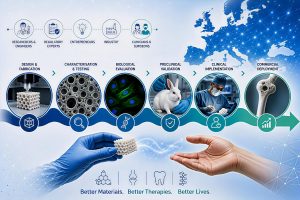
From Lab to Clinic: Translational Pathways for Bioceramics
The satellite event, ‘From Lab to Clinic: Translational Pathways for Bioceramics’ aims to bridge the gap between laboratory research in ceramic materials and clinical application. Adopting a translational approach will drive the transformation of the design, fabrication, characterisation and biological evaluation of bioceramics into clinically relevant and commercially viable solutions for patient-specific therapies.
This symposium will focus on the final stages of the translational pipeline, from preclinical validation to clinical implementation and commercial deployment. The latter involves complying with regulatory standards, developing personalised products for patients and scaling up manufacturing processes for end users. To this end, the Satellite Event will take place ahead of the opening of our traditional Bioceramics Symposium, bringing together invited speakers from the fields of clinical practice, surgery, regulatory expertise, industry and entrepreneurship.
Furthermore, the event will initiate the process of establishing a multidisciplinary European community, bringing together materials scientists, engineers, clinicians, surgeons and experts in health product regulations and the medical industry. This will lay the foundations for a future Translational Bioceramics branch within the Bioceramics Network of the European Ceramics Society (ECerS).
Organizers
- David Grossin. CIRIMAT, Université de Toulouse, CNRS, Toulouse INP- ENSIACET.
- Marc Bohner, RMS Foundation, Switzerland.
- María Canillas, Centro Laser, Universidad Politécnica de Madrid.
- With the collaboration of the Bioceramics Network of ECerS (Paola Palmero as leader)
Local organizers:
- Eugeni Cañas, Universitat Jaume I, Valencia.
- David Gonzalez Calatayud. Universidad Autónoma de Madrid.
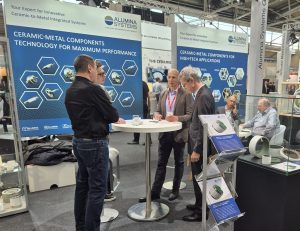
Industrial Forum, Career Fair & Exhibition
Bridging Academy and Ceramic Industry
Organized in collaboration with ATC.
Coming Soon! We are designing a powerful, integrated ecosystem to connect business, technology, and talent within the ceramic sector.
What to Expect:
- Industrial Forum: Parallel symposia featuring round tables and plenary lectures on hot industrial topics, energy transition, and digitalization.
- Career Fair: The highly successful talent matchmaking hub connecting students and young researchers with top-tier corporate recruiters.
- Industrial Exhibition & Equipment Demonstrations: Live tech showcases and hands-on demonstrations right on the exhibition floor.
Full program and participation guidelines will be released soon.
“Please note that registration for this parallel activity cannot be booked separately; it is only available as an add-on to the main congress registration.”
International Symposium on Ceramics and Glass in Cultural Heritage
Ceramics, the first human-made synthetic material and later glass, are materials closely linked to the historical and social development of humanity, either for artistic or for technical purposes. Consequently, studies of historical ceramics and glass need to be integrated in a European congress devoted to these materials.
Key Topics
- Provenance studies of ceramics and glass and trade networks
- Technological developments in ceramics and glass manufacture and their diffusion
- Architectural and Art ceramics and glass
- Ceramics and glass in museums
- Conservation and restoration
- New techniques and new approaches
- Ceramics and glass as anthropological and symbolic objects
- Creation and innovation
- Imitations, forgeries, authentification
- Recycling, sustainability, environmental issues in Cultural Heritage
- Artificial Intelligence and Computational Methods in Heritage Science
Organising/Scientific Committee:
CORE-TEAM
- Mª Pilar Alonso Abad, Faculty of Humanities and Education, University of Burgos, Burgos, Spain.
- Philippe Colomban, Faculty of Science and Engineering, Sorbonne Université-CNRS, Paris, France.
- Jorge A. Durán, Faculty of Fine Arts, University of Granada, Granada, Spain.
- Teresa Palomar, Institute of Ceramics and Glass, ICV-CSIC, Madrid, Spain.
OTHER MEMBERS
- Bernadett Bajnoczi, Institute for Geological and Geochemical Research, HUN-REN (Hungarian
Research Network), Budapest, Hungary. - Dennis Braekmans, Faculty of Archaeology, Leiden University, The Netherlands.
- Susana Coentro, Faculty of Science and Technology, Nova University, Lisbon, Portugal.
- Jaume Coll Conesa, National Museum of Ceramics González Martí, Valencia, Spain.
- Maria Cristina Caggiani, Earth Science Section, University of Catania, Catania, Italy.
- Marie Godet, Institute of Chemistry Research, IRCP-CNRS UMR 8247, Paris, France.
- Christian Lechelt, Fürstenberg Castle Museum, Fürstenberg, Germany.
- Trinitat Pradell, Engineering School, Polytechnic University of Catalonia, Barcelona, Spain.
- Gulsu Simsek Franci, Faculty of Chemical and Metallurgical Engineering, Yildiz Technical University,
Istanbul, Turkey. - Carmen Ting, School of Heritage and Culture, Leicester University, Leicester, United Kingdom.
Available with a reduced registration fee equivalent to a one-day pass.
Dates, venue, and abstract submission details will be updated shortly. Stay tuned!
From Lab to Clinic: Translational Pathways for Bioceramics
The satellite event, ‘From Lab to Clinic: Translational Pathways for Bioceramics’ aims to bridge the gap between laboratory research in ceramic materials and clinical application. Adopting a translational approach will drive the transformation of the design, fabrication, characterisation and biological evaluation of bioceramics into clinically relevant and commercially viable solutions for patient-specific therapies.
This symposium will focus on the final stages of the translational pipeline, from preclinical validation to clinical implementation and commercial deployment. The latter involves complying with regulatory standards, developing personalised products for patients and scaling up manufacturing processes for end users. To this end, the Satellite Event will take place ahead of the opening of our traditional Bioceramics Symposium, bringing together invited speakers from the fields of clinical practice, surgery, regulatory expertise, industry and entrepreneurship.
Furthermore, the event will initiate the process of establishing a multidisciplinary European community, bringing together materials scientists, engineers, clinicians, surgeons and experts in health product regulations and the medical industry. This will lay the foundations for a future Translational Bioceramics branch within the Bioceramics Network of the European Ceramics Society (ECerS).
Organizers
- David Grossin. CIRIMAT, Université de Toulouse, CNRS, Toulouse INP- ENSIACET.
- Marc Bohner, RMS Foundation, Switzerland.
- María Canillas, Centro Laser, Universidad Politécnica de Madrid.
- With the collaboration of the Bioceramics Network of ECerS (Paola Palmero as leader)
Local organizers:
- Eugeni Cañas, Universitat Jaume I, Valencia.
- David Gonzalez Calatayud. Universidad Autónoma de Madrid.
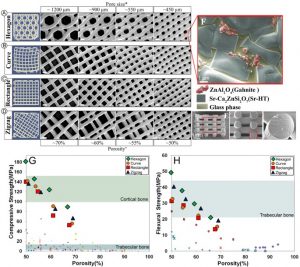
Next-Generation Materials for Healthcare
This specialized workshop bridges the gap between advanced ceramic engineering and medical applications, gathering leading experts in biomaterials, tissue engineering, and healthcare technologies.
Key Topics
- Bioactive glasses and ceramics for bone regeneration.
- Injectable bioceramics and bone cements.
- Surface functionalization and antimicrobial ceramic coatings.
- 3D printing and additive manufacturing of medical ceramics.
Available with a dedicated single-day reduced fee or as an add-on to your full ECerS 2027 registration.
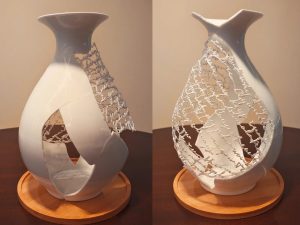
Preserving the Past, Inspiring the Future
We are thrilled to host this dedicated symposium addressing the scientific study, conservation, and cultural impact of historical ceramics. Because the heritage community operates on distinct project timelines and budgets, we are opening visibility early to help you plan your attendance.
Why Attend?
Niche Focus: Delve into materials science applied to cultural heritage, provenancing, and ancient manufacturing technologies.
Accessible Participation: We recognize that heritage research funding can be highly constrained. To ensure no one is left out, a specific and significantly reduced registration fee (equivalent to a one-day pass) will be available for this symposium.
Key Topics
- Archaeometric characterization of ancient pottery and glass.
- Conservation and restoration materials and techniques.
- Cultural heritage preservation and digital documentation.
Dates, venue, and abstract submission details will be updated shortly. Stay tuned!